BLOG
Ruby Wallace-Ewing — what photography teaches us about aging

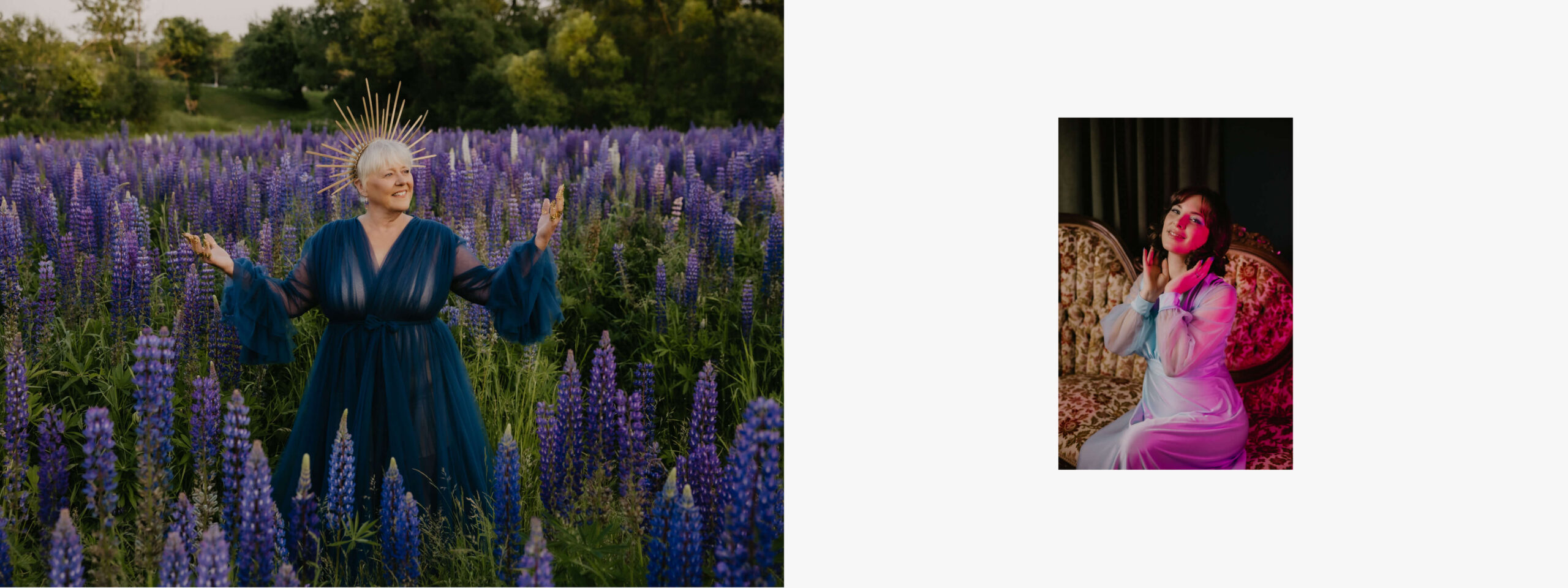
What can photography teach us about aging? For Ruby Wallace-Ewing, the answer began with a series of portrait sessions during the pandemic and evolved into The Goddess Project. This is a series dedicated to celebrating women in their 70s, 80s, and beyond through photography and filmed interviews.
Along the way, Ruby began reflecting not only on beauty and aging, but also on the privilege of growing older at all. “Aging is a privilege that not everybody gets to experience,” she says, and in her images, that privilege is unmistakable.
Read the full interview to discover more about how the project shaped her perspective on photography, the connections it fosters between generations, and why this work feels like a gift she never takes for granted.

Your Goddess Project has become such a recognizable part of your work. How did you take that initial idea and turn it into a signature experience?
I really never thought that the photoshoots I was doing with older women would become such a major part of my business. Initially, it was just something to keep me busy during the pandemic. I did photoshoots with my grandmothers and a couple of other older women who were family friends that I knew would be into trying something like this.
It wasn’t until I started sharing the photos online and people began reaching out to book sessions for their grandmothers, mothers, or even themselves that I realized this could become something bigger. Even then, it took a while to figure out how to make The Goddess Project feel like its own distinct experience, separate from the other goddess photoshoots I offer.
It really wasn’t until 2025, when I officially launched The Goddess Project and gave it a name, that I fully separated it from my other work and focused on what would make it feel truly special and unique. Over time, I streamlined the experience based on what I had learned working with older adults. I had to figure out how to navigate challenges like coordinating with multiple family members helping organize the shoot, or working with someone in their 90s who may not be as tech-savvy as some of my younger clients. Even within the 70+ age range, there’s such a huge variety of personalities, abilities, and needs. There’s a big difference between photographing someone who is 70 and someone who is 100 — and even two people of the same age can have completely different comfort levels and experiences.


I wanted the experience to feel accessible while still being deeply personal and customizable. One of the biggest additions I made was guaranteeing a filmed interview as part of the experience. Through doing these shoots over the years, I’ve had a few women pass away after their sessions, and it made me realize how incredibly meaningful it is to have video of our loved ones telling their stories in their own words.
Everything about The Goddess Project really came from five years of experience — learning what mattered most to both the women being photographed and their families. I wanted to create something that not only celebrated the woman in front of the camera, but also created lasting heirlooms and memories that families could treasure for years to come.
Beauty is often closely associated with youth. Through your work on the Goddess Project, how has your perspective on beauty evolved?
When I started doing Goddess photoshoots, I was very firmly considered a young person. I was in my 20s, and of course now at 32, I’m still young, but there is something interesting about crossing from your 20s into your 30s. You start to experience little shifts, noticing smile lines deepening, changes here and there, and becoming more aware that you’re no longer viewed as quite as youthful as before. It’s been interesting to go through that process at the same time that I’ve been working so closely with older adults.
Beauty is also so subjective. The word “beauty” isn’t only applied to physical appearance. We talk about beautiful sunsets, beautiful music, beauty in humanity, beauty in emotion and connection. So I don’t think my perspective on beauty was ever limited to the traditional beauty standards we often see in the U.S., especially the idea that beauty is tied only to youth. I’ve always found beauty in so many different things.

That said, this project has definitely made me think about physical beauty in a deeper way. It’s forced me to look at aging differently than I ever had before. I really do see beauty in the physical signs of aging, because the older I get, the more apparent it becomes that not everyone is lucky enough to grow old. Aging is a privilege that not everybody gets to experience.
There’s something beautiful about the signs that show a life fully lived, the lines created by laughter and emotion, the effects of time spent in the sunshine, the physical toll of moving through the world for 70, 80, or 90 years. Even in my 32 years, I’ve experienced hardships and witnessed how difficult life can sometimes be, and these women I photograph have lived through so much more. There’s really no way to avoid the roller coaster of life, and I think there’s beauty in the evidence of that journey written across someone’s face and body.
The Goddess Project has reinforced for me that beauty is not about looking untouched by life.
What happens to a woman, emotionally or physically, when she steps into this “goddess” version of herself?
Every one of my goddesses has their own unique experience with The Goddess Project, so there’s never just one answer to that question. For some women, it’s the first time in a very long time that they’ve had a reason to really dress up and be the center of attention, and emotionally that can be such a fun and freeing experience.
You can actually watch many of these women come alive throughout the session. Some arrive incredibly nervous or hesitant to even try it, and by the end they’re laughing, suggesting their own ideas, and completely leaning into the experience.
I remember one woman who brought a wig almost as a joke. She was excited for her family to see it and thought it would be funny, but once she actually put it on and looked at herself, you could visibly see something shift. It stopped feeling like a joke and started feeling like she genuinely saw herself as beautiful in that moment.


That emotional transformation often becomes physical too. At the beginning of a session, some women avoid eye contact or have very closed-off body language. They may hold themselves small or seem unsure of how to pose or take up space. But by the end, they’re throwing their arms out dramatically for photos, hugging me goodbye, and fully expressing themselves. Their body language becomes bigger, louder, and more open. Watching that shift happen is one of the most rewarding parts of what I do.
Of course, not every woman starts out shy. Some show up completely confident and ready for the experience from the very beginning, and honestly, that’s just as fun for me too. The beauty of the project is that every woman brings her own personality and energy into it, and the experience becomes a reflection of that.
Do you go into a photoshoot with a story in mind, or do you discover it as you go?
With all of my clients, I don’t typically go into a photoshoot with a fully formed story already in mind. Occasionally, someone will come to me with a very specific concept or character they want to embody, and in those cases we can build around that idea. But most of the time, the story is really just about them.
A lot of the process is intuitive. The more I’ve done this kind of work, the more I’ve learned to trust my instincts as a photographer. As we move through the session, I’m constantly observing and responding to the person in front of me. I’m paying attention to their energy, their body language, the things they say casually, the moments where they light up or become more confident. All of those little details help shape the direction of the shoot in real time.

I don’t always know exactly where a session is going when it starts, but I think that’s part of what makes the experience feel genuine. I’m always listening and watching very closely, and that allows me to naturally design the session around who that person is. In a way, the story reveals itself as we go.
How has working with women 70+ changed the way you approach photographing anyone who sits in front of your camera, even outside of the Goddess Project?
I’m not sure The Goddess Project has completely changed my approach to photographing people, because even before starting it, I was already someone who put a lot of care into my clients and paid close attention to different comfort levels, personalities, and abilities. A lot of the people who seek out my work are doing so because they’ve overcome something difficult and want to celebrate themselves. Sometimes that’s something health-related, a divorce, a major loss, or another life-changing experience. Other times it’s something joyful, like celebrating a milestone birthday or finishing a degree.


Because of that, I’ve always approached photography with a lot of sensitivity and awareness of what these sessions might mean emotionally to the person in front of my camera. I think one of the biggest things The Goddess Project has reinforced for me is just how meaningful these images can become over time. Last year, I hosted a gala event where I gifted framed photographs to all of the women who participated in the project, and seeing them hold those physical images in their hands really impacted me. It reminded me that photography is meant to exist beyond a screen.
That experience actually changed the way I structure all of my packages now. This year, I started including physical artwork with every session because I truly believe these photographs should become heirlooms, something tangible that can be held, displayed, passed down, and cherished for years to come.
Working with women in their 70s, 80s, and 90s has really emphasized for me how valuable photographs become as time passes, not just for the person being photographed, but for the people who love them.
Which Pixieset tools do you currently use, and how have they impacted your workflow?
I use Pixieset to deliver proof galleries, and final galleries, but I also use it as a virtual client closet, which has been incredibly helpful for my workflow. My photoshoots involve a lot of costumes, props, and styling pieces, and because many of my clients travel from far away, and because I don’t have a traditional studio space, it isn’t always practical or aligned with the experience I want to provide to have clients come preview everything in person.
Instead, I upload all of the wardrobe options into a Pixieset gallery so clients can browse and customize their session ahead of time. They’re able to use the favorites feature to select the outfits and props they’re most interested in, which makes planning so much easier for both of us. It really streamlines the entire preparation process.
I also use Pixieset for proof galleries. Clients can view all of the proofs from their session, select the images they want edited, leave comments, and request specific retouching adjustments directly within the gallery. Having everything centralized in one platform, from planning the session to delivering the final images, has made my workflow feel much more seamless and organized, both for me and for my clients.
What advice would you give photographers who want to begin photographing women of all ages in a more thoughtful and inclusive way?
I think with anyone, and really with any kind of service or experience, people want reassurance that they belong. The best way to give them that reassurance is to actively show them that they do.
For photographers who want to photograph women of all ages in a more thoughtful and inclusive way, I think it starts with representation. When you’re building your portfolio, hosting model calls, sharing work online, or talking about your services, you need to intentionally show women of all ages. If people don’t see themselves reflected in your work, they’re much less likely to take the next step and reach out.
Photoshoots are already a very vulnerable experience for a lot of people. Many women are walking into a session carrying insecurities or doubts about whether they’re “photogenic” or whether this type of experience is really meant for them. So as photographers, part of our job is to remove as much of that doubt as possible.


When women can clearly see people who look like them, it becomes much easier for them to imagine themselves in front of your camera too. Do some free sessions, and have that proof in your portfolio!
Is there a woman you’ve photographed that made the biggest impact on you? Can you tell us the story?
It’s honestly impossible for me to choose just one woman who has made the biggest impact on me because every woman I photograph leaves some kind of impact. But if I had to choose one story, I would probably talk about Anna Hilmar.
Anna was the very first woman I photographed for the official launch of The Goddess Project last year, when I committed to doing a year of free photoshoots funded through community donations. I raised enough money to provide 12 free sessions, and Anna was the first recipient selected from a pool of almost 300 applicants.
Her session actually came together very last minute. I was already headed to Florida for other clients when I had a cancellation, and I decided it was the perfect opportunity to begin the project. At the time, Anna was staying in a rehab facility. When I first arrived, she was lying in a hospital bed wearing a johnny, and we genuinely weren’t sure if she was even going to feel up to leaving her room.

But she completely exceeded every expectation. Her granddaughter did her hair and makeup, the staff helped her get dressed in this beautiful long blue velvet robe, and she agreed to let us wheel her outside into the parking lot so we could photograph her in front of the palm trees.
The moment I arrived she absolutely came alive (she literally yelled with excitement when I came into her room, took a breath and yelled again!). She was singing, laughing, making jokes, tearing up while telling stories about her life, she was just so full of energy and openness. She was incredibly honest with me about how much the experience meant to her, and what made it even more emotional was that so much of her family was there witnessing it with her.
Sadly, Anna passed away a few months later, but she left such a huge impact on me. Partly because she was the very first woman involved in this project that I had been so nervous to officially launch, but also because of the strength she showed that day. She gathered up all of her energy to fully embrace this experience, not only for herself, but for the people she loved.


In November 2025, I hosted a gala event in Maine for The Goddess Project, and Anna’s family actually flew up from Florida to attend. It became this really emotional moment of closure after such a tremendous loss, and they’ve continued to tell me how meaningful the experience and the photographs have been for their family.
As someone who works almost entirely alone, hearing that means a lot. Not because I need validation, but because sometimes when you spend so much time creating social media content around your work, it can be easy to forget the real-life impact it’s having. Experiences like Anna’s remind me that this is so much bigger than photos or videos online. These sessions leave a real mark on the lives of the people involved, and that makes me feel like the work I’m doing truly matters.
Ruby's work is proof of how meaningful photography can become over time. Through her project, she reminds us portraits are not just images for the present, but memories that families will continue to hold onto for years to come.
If you've ever talked yourself out of being photographed, because you felt too old, not pretty enough or not ready, Ruby's work gently challenges every one of those reasons. Her images carry meaning on two levels. The experience and empowerment her subjects feel during the session, and the way those photos grow even more precious over time and become memories that families return to. For photographers, her work is also a reminder that photography begins with representation, with who we choose to make visible and who is still left out of the frame.